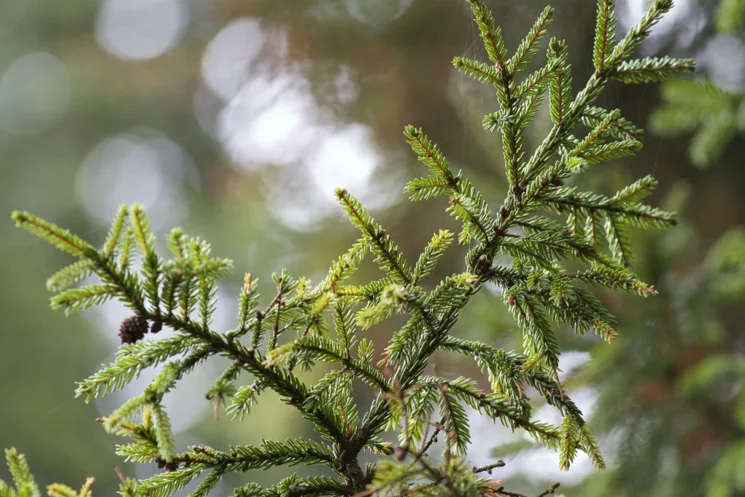

Christmas Tree - History
The Christmas tree is one the most significant objects of attraction during Christmas. It is interesting to know how and when the custom of Christmas tree started and what made it so popular. There are several facts related to the origin and development of the Christmas tree at every stage in history.
Ancient times

Many years ago, there were certain evergreen trees which were considered to be miraculous. This is because when the leaves of other trees turn fade, these evergreens still dazzled with greenery. People began to worship these trees as a symbol for life and hope. It even symbolized that spring will come soon after the cold and dark winter season. Many people also believed that this tree can ward off ghosts and evil spirits.
The custom of decorating the home and temple with these green trees existed even before the advent of Christmas and the tradition was followed by Romans, Egyptians, Scandinavians and many others. Ancient Roman emperor Constantine for example, indulged in the custom of worshipping and decorating the evergreen tree during Saturnalia. This was a winter festival which was celebrated in the honor of the god of harvest, Saturnus.
Medieval times
It was in fact the Germans who started the tradition of associating Christmas with these evergreen trees that started becoming popular as Christmas trees. It was not before the 16th century AD that Christmas trees were brought home for celebration along with the Christmas festival. In the beginning, paper roses, candies and berries were used to decorate Christmas trees. The custom became popular in Austria, Poland, Spain and other parts of Europe. People used to decorate these trees with silver tinsels, candles, cookies, fruits, gift pouches and beads, among other items. However, it did not gain popularity in the United Kingdom.
The custom of worshipping and decorating Christmas trees started in the United States not before the 1700s because it was considered as a Pagan symbol. The tradition was initiated by German immigrants, who settled in the eastern Pennsylvania and Chicago regions. By mid-1800s, Christmas trees became a part and parcel of American tradition during Christmas. By this time, it also started gaining some momentum in the United Kingdom, especially after Prince Albert, Queen Victoria's husband, introduced Christmas tree into the royal family.
Modern times
In modern times, the festival of Christmas remains incomplete without Christmas trees. In the 1920s, the holy tree for the first time was displayed in the White House. After World War II, its popularity increased tremendously in many parts of the world. Several new accessories, some made of plastics and light metals started to come up for the tree decoration. To conserve nature, artificial trees gained popularity as against evergreen trees which were cut and used earlier. Artificial trees are found in many shops all over the world before the Christmas together with numerous attractive accessories to decorate it. Today, bringing home a Christmas tree and adorning it beautifully for Christmas is a common practice and a thing of joy in most parts of the world.